Beyond the Aesthetic
Solsten Staff • 2026-02-02
The Psychology of High-Growth Beauty and Cosmetics Ads
TL;DR: In 2026, beautiful ads are no longer enough to scale beauty brands on Meta. Under the Andromeda algorithm, performance depends on psychological resonance—not aesthetics. Brands that optimize for visual appeal without aligning to consumer motivation see rising CPAs and stalled growth.
The “Pretty” Trap
Why Your Beauty Brand Is Stalling on Meta
Scroll through the beauty feed and you’ll notice something unsettling.
Everything looks good.
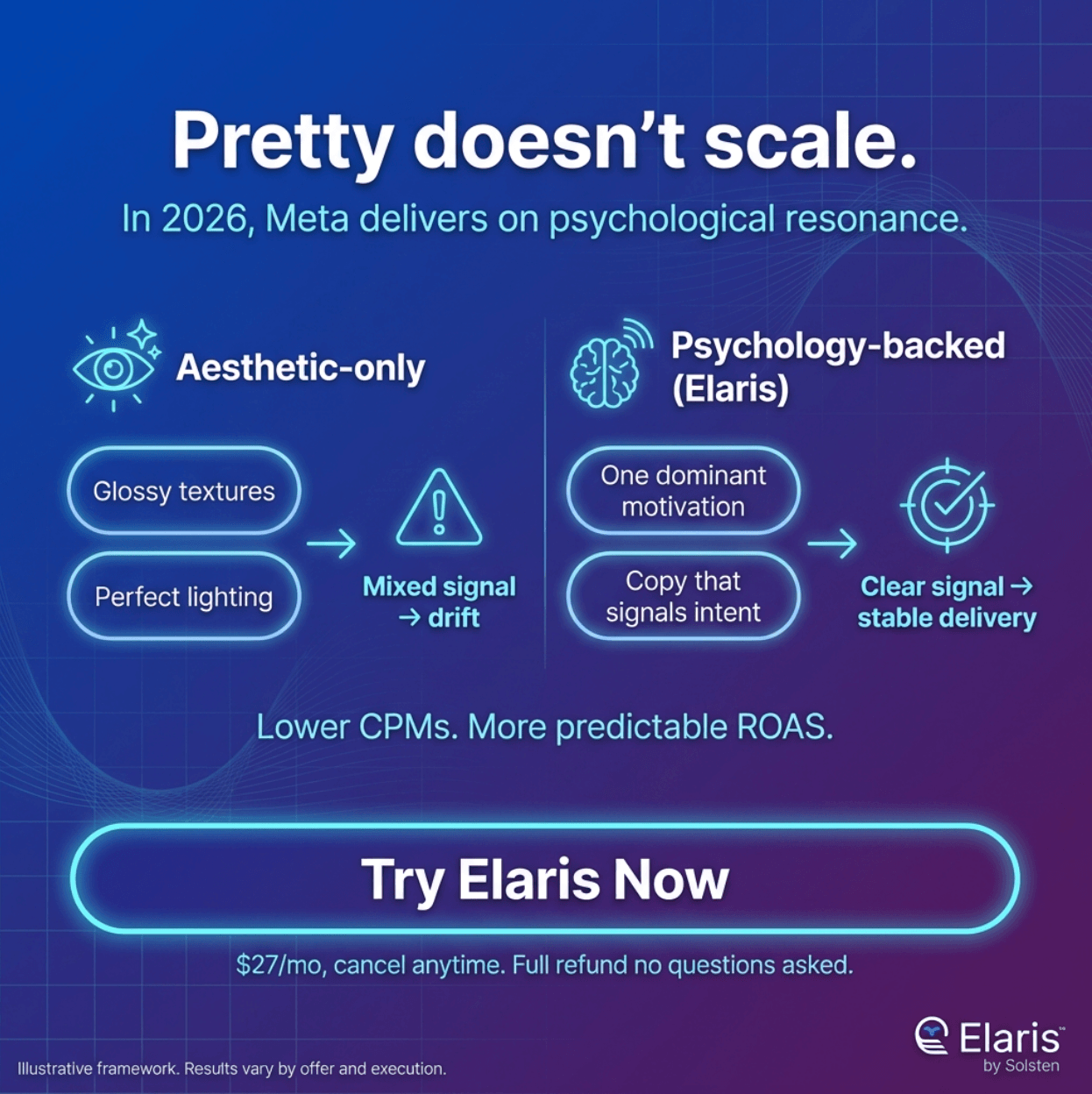
Perfect lighting.
Glossy textures.
Flawless transitions.
And yet most of these ads don’t scale.
This is the Aesthetic Trap.
There was a time when being visually superior meant you won the auction. In the pre-Andromeda era, “pretty” stopped the scroll. In 2026, pretty is table stakes.
Every brand has access to high-fidelity UGC.
Every brand knows how to shoot textures.
Every brand has learned the aesthetic language of beauty.
If your CPAs are creeping up and growth has flattened, it’s not because your ads look bad.
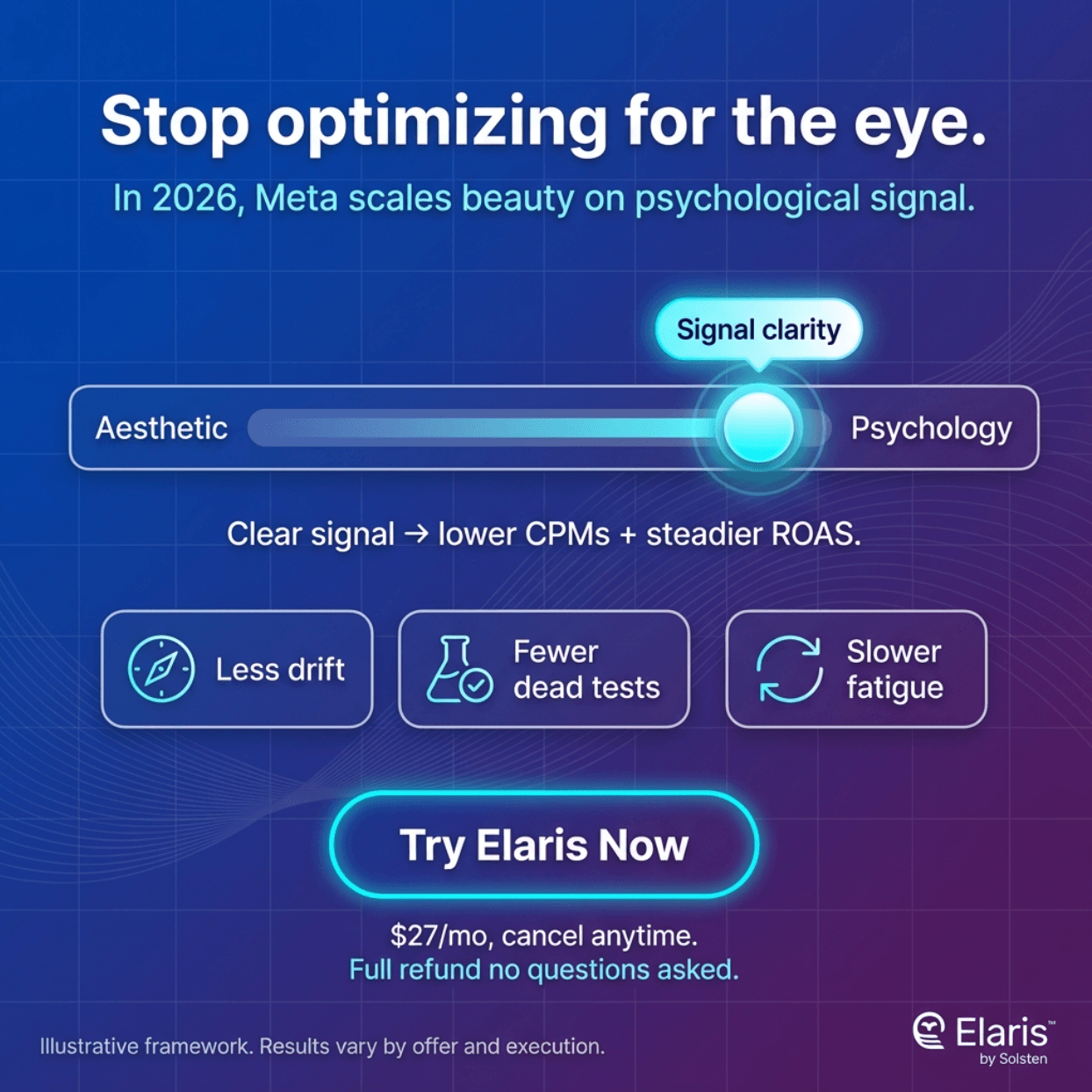
It’s because you’re optimizing for the eye when Meta is optimizing for the brain.
Beauty Brands Don’t Sell Products
They Sell Psychological Outcomes
The highest-growth cosmetics brands don’t sell:
- Glowy skin
- Bold lips
- Clean ingredients
They sell:
- Confidence
- Safety
- Belonging
- Identity
Elaris exists to make those outcomes legible to the algorithm. By leveraging Solsten’s database of 200,000+ psychologically modeled audiences (digital twins built from nearly 2 million real human assessments), beauty brands can stop guessing what “vibe” works and start targeting the psychological state that precedes purchase.
Try Elaris For Free - 3 Day Free Trial. $27/day Starter. Guaranteed results or money back, no questions asked.
What Is Psychology-Backed Beauty Marketing?
Quick Answer:
Psychology-backed beauty marketing aligns ad creative with the internal motivations of consumers such as self-actualization, social belonging, or harm avoidance using psychometric data rather than demographics alone. This approach triggers the emotional state that leads to purchase, improving ROAS and reducing creative fatigue.
In other words:
Features explain.
Aesthetics attract.
Psychology converts.
The Three Psychological Personas That Dominate the Beauty Feed
Beauty buyers are not “Women, 18–35.”
They are archetypes.
Using Elaris and Solsten data, three dominant psychological triggers consistently emerge in cosmetics performance.
1. The Competence Seeker
(High Conscientiousness / Traditional)
This buyer isn’t looking for inspiration.
They want reassurance.
They respond to:
Ingredients
- Clinical language
- Dermatologist approval
- Real, imperfect before-and-afters
If your ad feels dreamy, abstract, or overly artistic, they disengage.
They don’t want beauty fantasy.
They want proof.
2. The Social Achiever
(Extraverted / Status-Driven)
This buyer uses beauty to position themselves socially.
They care about:
- Packaging
- Trends
- Unboxing moments
- How the product performs in public
Their question is simple: “Will this make me look like the best version of myself around other people?”
Utility matters, but symbolism matters more.
### 3. The Self-Expressionist
(High Openness / Rebellious)
For this buyer, makeup is not correction.
It’s art.
They are repelled by “standard” beauty language and drawn to:
- Bold color
- Creative risk
- Inclusivity
- Raw, unfiltered energy
If your ad feels safe or corporate, they scroll past.
If you serve a Social Achiever ad to a Competence Seeker, Meta’s AI doesn’t politely downgrade you.
It penalizes you.
CPMs rise.
Delivery fragments.
ROAS collapses.
Stop Testing Shades
Start Testing Psychological Triggers
Most beauty testing looks like this: _ “Let’s test red lipstick versus nude.”_
That’s surface-level.
Shades don’t drive purchase.
Motivations do.
With Elaris, we map your creative against Solsten’s psychological data and surface insights like:
“Your buyers are 70% low-openness, high-conscientiousness.”
That single insight changes everything.
Suddenly:
- High-concept brand films stop making sense
- Ingredient education starts winning
- “Pretty” becomes secondary to “credible”
You stop iterating randomly. You start engineering intentionally.
Case Study: The Clean Beauty Pivot
A mid-sized skincare brand came to us stuck at a 1.2x ROAS.
Their ads were stunning:
- Slow-motion water
- Floating leaves
- “Save the planet” visuals
They were targeting organic enthusiasts.
Elaris told a different story.
Their highest-LTV customers were high-anxiety, harm-avoidant buyers.
They weren’t buying clean beauty because they loved nature.
They were buying it because they were afraid of irritation, toxins, and long-term damage.
The Adjustment
We shifted the creative from:
- “Good for the Earth”
To:
- “Dermatologist-approved”
- “Zero irritants”
- “Nothing your skin has to fight”
Visuals became structured. Language became calming. Claims became specific.
The Result
ROAS jumped to 3.2x in 72 hours.
Not because the ads were prettier.
Because the psychological signal finally matched the human.
Winning the Andromeda Feed in 2026
Meta’s Andromeda AI has already seen every version of a serum bottle and a face close-up.
What it’s looking for now is a psychological signature.
When you upload Elaris-validated creative, you’re effectively telling the AI:
“This ad is for someone who values safety and routine.” “This ad is for someone driven by self-expression.”
The system doesn’t guess.
It recognizes.
Try Elaris For Free - 3 Day Free Trial. $27/day Starter. Guaranteed results or money back, no questions asked.
Recognition leads to:
- Lower CPMs
- Higher relevance
- Better account health
The Elaris Beauty Blueprint
Visual Syntax
- Structured, symmetrical layouts → conscientious buyers
- Dynamic, asymmetrical layouts → high-openness buyers
Copy Semantics
- “Proven, Safe, Results” → security-driven audiences
- “Discover, Transform, Bold” → expression-driven audiences
Validation Loop
Feed winning creative back into Elaris to track shifts in psychological response and stay ahead of fatigue.
The Bottom Line: Beauty Is a Brain Game
The brands that win beauty in 2026 won’t be the ones with the biggest production budgets.
They’ll be the ones who understand that the algorithm is a mirror of human psychology.
Elaris gives you the mirror.
Stop hoping people like your ads.
Start knowing why they will.
Frequently Asked Questions (FAQ)
1. Why aren’t my high-production beauty videos converting? High production value does not equal psychological resonance. If an ad looks good but fails to trigger a core motivation, such as security or status, Meta’s AI struggles to find the right audience, resulting in high CPMs and low ROAS.
2. How does the Solsten 200k+ audience database apply to cosmetics? Solsten includes psychometric data tied to beauty behaviors, skin concerns, and brand loyalty. Elaris maps these traits to creative decisions so ads are validated before launch.
3. Can Elaris help with influencer and UGC selection? Yes. Elaris identifies whether your audience prefers authoritative experts, relatable peers, or expressive creators, ensuring influencer selection matches psychology, not follower count.
4. What psychological trigger is most common in beauty? Self-actualization and social belonging dominate, but harm avoidance is rapidly growing in clean and medical-grade beauty categories.
5. How does Andromeda change beauty ad design? Andromeda uses computer vision to interpret emotional cues in visuals. Facial expressions, color psychology, pacing, and structure now directly influence delivery. Elaris provides the psychological blueprint behind those choices.